
FRAME BY FRAME · ISSUE 6
The Others Visual Analysis
2001 · Horror / Thriller / Mystery · Directed by Alejandro Amenábar
Spoilers below, including the ending.
Alejandro Amenábar’s 2001 The Others makes a large house feel frightening by limiting what its occupants can see and what they are willing to accept. Curtains stay closed, doors are locked, and candlelight reveals only a small area at a time. The result is not a world without information. It is a world in which every piece of information arrives late, partial, or emotionally difficult to interpret.
That makes the film especially well suited to an ending-led MovieWordle article. The approved frames do not need to show a ghost or a twist. A family gathered around a candle, a face emerging from darkness, and a profile held against blackness all point to the same visual rule: in this house, visibility is controlled, and certainty is fragile.
The house is organized around restricted visibility
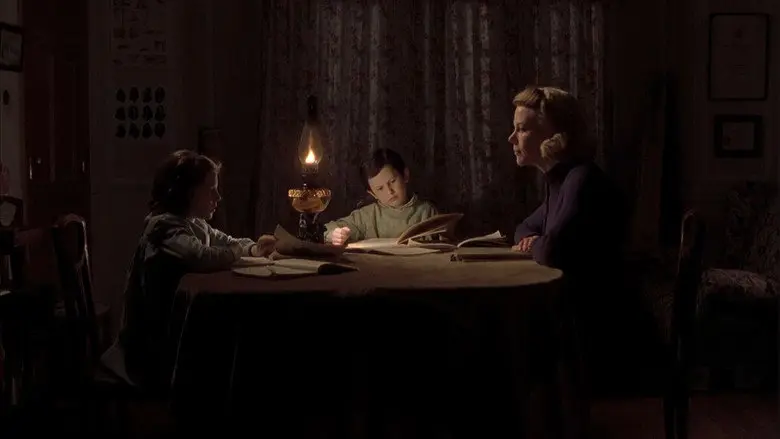
The mansion in The Others is not frightening because it is constantly chaotic. Its rooms are orderly, quiet, and governed by routines. Curtains must be drawn before a new room is opened. Doors require keys. The household’s rules create a sense of safety, but they also make movement dependent on permission and memory.
The candlelit family frame shows how the film turns that routine into a visual condition. The flame creates a small island of detail while the surrounding room falls away. Faces can be close enough to read and still be separated by shadow. The image gives the viewer a household, but not a complete account of what surrounds it.
This controlled visibility also shapes the film’s pacing. A new room is not simply entered; it is prepared. A sound is not immediately matched to a source. The delay allows ordinary domestic actions to become evidence that may need revisiting.
Candlelight makes knowledge feel temporary
The film’s candles are practical objects, but their visual effect is larger. They reveal surfaces unevenly, leave corners unconfirmed, and force faces to emerge from darkness rather than sit in complete illumination. That is a useful recognition cue because the light seems to be doing the looking for the characters, and it can only look so far.
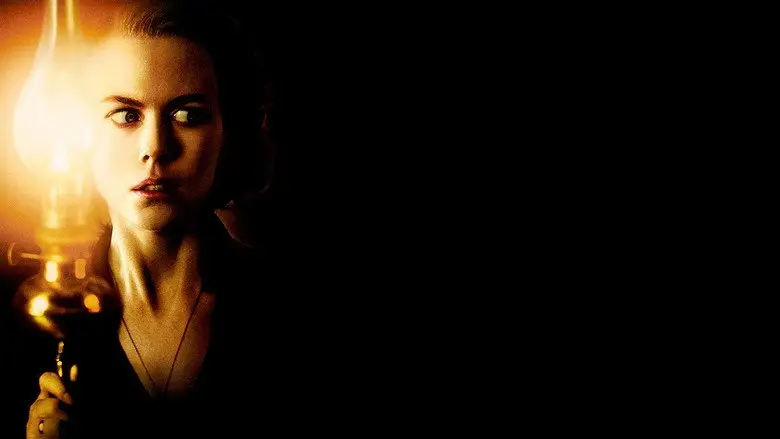
The close candle frame turns a face into a boundary between knowledge and fear. We can see the expression, the hand, and the flame, but the surrounding blackness remains active. It is not proof that an unseen presence is there. It is a picture of a person trying to make decisions with incomplete visual information.
That distinction keeps the analysis grounded. The darkness does not automatically symbolize one hidden truth. It gives the film a way to make perception, rather than spectacle, carry the suspense.
The Others ending explained
The ending reveals that Grace and her children are not living people being invaded by ghosts. They died in the house, and the family they have treated as an unseen presence is alive. Grace’s late understanding reorganizes the earlier scenes: the sounds, rooms, and accusations were filtered through the family’s mistaken belief that they were the rightful occupants.
That is the plot fact. The film’s interpretation comes from how the reveal changes the meaning of its visual rules. The closed curtains and locked doors were not only defenses against an outside haunting. They were signs of a household trying to preserve a reality that could no longer hold. The house’s darkness protected denial as much as it concealed movement.
The final explanation is therefore more precise than “the ghosts were the real victims.” The film makes both sides part of a domestic conflict shaped by grief, fear, and incompatible points of view. The living family experiences the house as occupied; Grace and the children experience it as home. The same rooms hold both accounts until the characters can no longer keep them separate.
Why the approved frames are fair clues
The selected frames avoid giving away the reveal while preserving the film’s visual identity. The family around the table establishes domestic stillness. The candle close-up shows how little light is available for certainty. A profile against near-blackness reduces a person to a fragile edge of information.
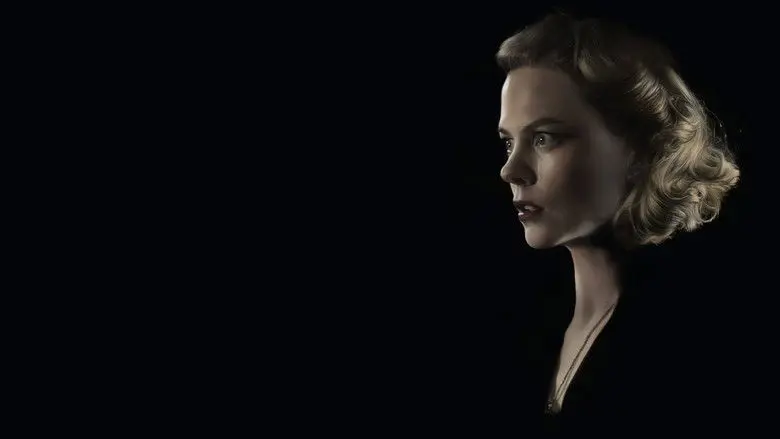
For players, the useful pattern is not “look for a ghost.” Look for a candlelit interior, a face held at the edge of shadow, and a house whose rules seem stricter than the situation should require. Those cues point to the film’s method without turning the frame into a spoiler.
Rewatching after the reveal
Once the ending is known, pay attention to who receives visual confirmation and who is left outside the room. Notice how often a door separates two explanations, or how a curtain turns the exterior into an unseen threat. The film’s images do not become simple after the twist; they become more exact.
That is the lasting strength of The Others. Its mystery is not solved by adding a monster to the house. It is solved by recognizing that the house has been holding incompatible versions of reality at once.
Conclusion
The Others uses darkness, candlelight, thresholds, and domestic routine to make perception feel uncertain. Its ending explained the plot, but the visual design explains why the revelation belongs to the whole film rather than to one final trick. The approved MovieWordle frames capture that design: each shows a family trying to live inside a space that no one fully understands.
Keep playing
Ready for another film? Browse the MovieWordle 6 Frames archive and choose a recent puzzle to solve.