
FRAME BY FRAME · ISSUE 10
The Birds Visual Analysis
1963 · Horror / Thriller · Directed by Alfred Hitchcock
Spoilers below, including the ending.
Alfred Hitchcock's 1963 The Birds does not turn its attacks into a puzzle with a clean solution. Its tension comes from watching ordinary systems fail in plain sight: a pet shop, a schoolyard, a house, a road out of town. This The Birds ending explained guide uses three approved MovieWordle frames to track that change from managed everyday life to exposure, waiting, and retreat.
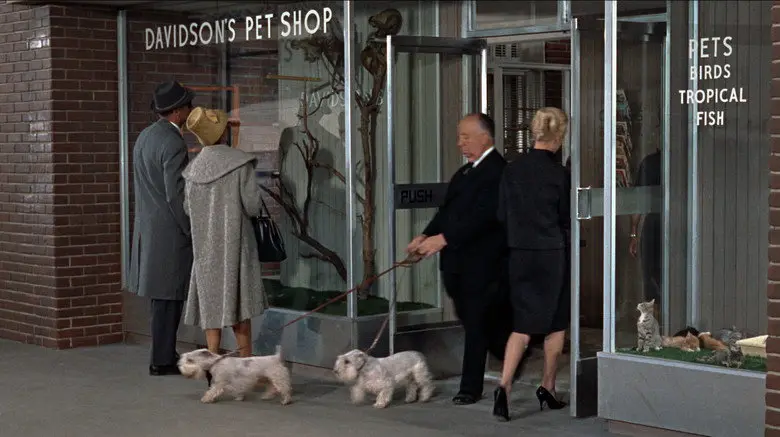
The pet shop establishes a world where nature looks contained
The pet-shop frame is a useful beginning because it presents animals as part of an orderly city display. Glass separates the animals from the pavement. Signs label what is for sale. People, dogs, birds, and storefronts occupy distinct places in the composition. Nothing in the image needs to announce danger for the film's premise to be present.
That calm organization is important to the horror. The Birds does not begin in a ruined landscape or an isolated mansion. It begins among transactions, routines, and social codes. The threat becomes disturbing because the places designed to sort life into categories stop doing their job. A bird is no longer a pet, scenery, or a harmless background detail. It becomes an unpredictable force that people cannot bargain with or explain away.
Bright outdoor space becomes a place without cover
Another approved frame shows a child holding balloons against an open blue sky. The color is cheerful, the field is open, and the child is positioned in a picture of daylight safety. That contrast makes the image valuable for players: Hitchcock does not need darkness to make the world feel exposed.
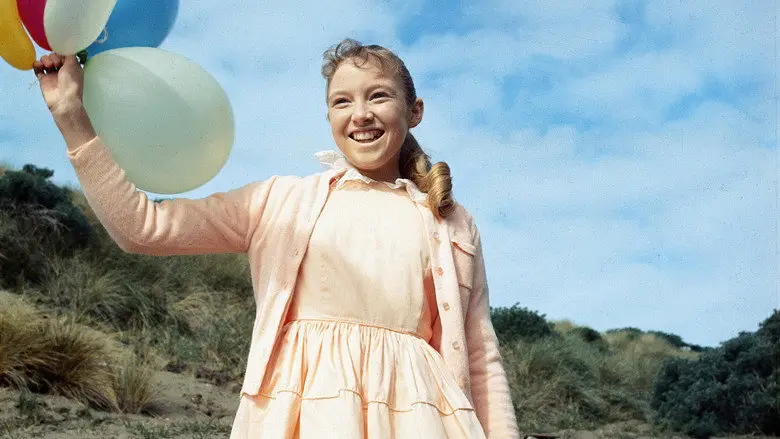
The film repeatedly makes open space feel difficult to read. A sky can look empty until movement gathers inside it. A playground can turn dangerous before the adults have agreed on what they are seeing. The visual tension comes from delay as much as impact. The viewer scans the background, the roofline, and the distance because the film teaches us that an ordinary frame may have stopped being ordinary before anyone in it notices.
Windows turn people into an audience under pressure
The third frame compresses several people behind a window. Faces lean toward the glass, bodies crowd the opening, and the frame within the frame gives the group a shared line of sight. They are looking out, but they are also trapped inside the composition.
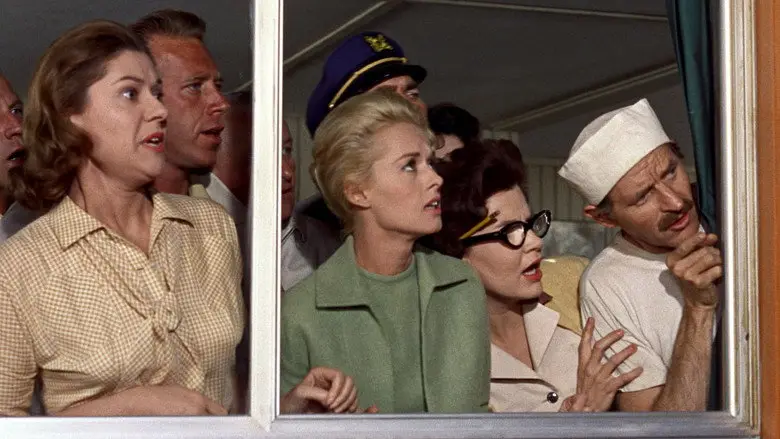
This is a recurring tension in The Birds: people observe the threat before they can act on it. Windows, doorways, and cars offer temporary shelter, yet they also turn characters into spectators. The film keeps shifting the relationship between inside and outside. A room can provide cover, then become a place where everyone waits for the next impact. A car can promise escape, then become a narrow route through a landscape the characters no longer control.
The Birds ending explained: the film withholds a cause on purpose
By the ending, Mitch, Melanie, Lydia, Cathy, and the family leave the damaged house and move carefully toward the car while birds cover the surrounding landscape. They drive away from Bodega Bay without defeating the birds or receiving an explanation for the attacks.
The film's plot leaves the cause unresolved. It does not settle on punishment, contagion, environmental revenge, or a single human action as the answer. That absence is not a missing final clue. It keeps the central fear intact: the characters have learned that familiar systems cannot account for what is happening, and leaving town is only a practical response, not a resolution.
The quietness of the final departure matters. A conventional ending might make survival look like victory. Here, the family moves slowly through a world that has become visibly occupied by something they cannot negotiate with. The lack of a final attack does not restore calm; it makes the birds' presence feel larger than one incident or one location.
Why these approved frames work as puzzle clues
The selected images trace the film's shift in scale. The pet shop makes birds part of an organized public world. The child and balloons put vulnerability beneath an open sky. The window frame turns a group of observers into people enclosed by what they are watching. Together they identify The Birds through bright color, public space, and the growing failure of ordinary boundaries.
Conclusion
The strongest The Birds ending explained reading begins with what the film refuses to provide: a final cause. Hitchcock builds the threat through places that should offer order, cover, or visibility, then lets each one fail. The ending leaves the family moving through that altered world rather than escaping it.
Keep playing
Ready for another film? Browse the MovieWordle 6 Frames archive and choose a recent puzzle to solve.