
FRAME BY FRAME · ISSUE 20
Scream Visual Analysis
1996 · Horror / Crime / Mystery · Directed by Wes Craven
Spoilers below, including the ending.
Wes Craven's 1996 Scream explained through its approved frames is a film about horror becoming a performance that anyone can enter. The first phone call sounds like a private conversation, the knife appears as a simple tool, and the killer's mask hides a face that could belong to someone in the room. The film's visual system keeps turning recognition into suspicion.
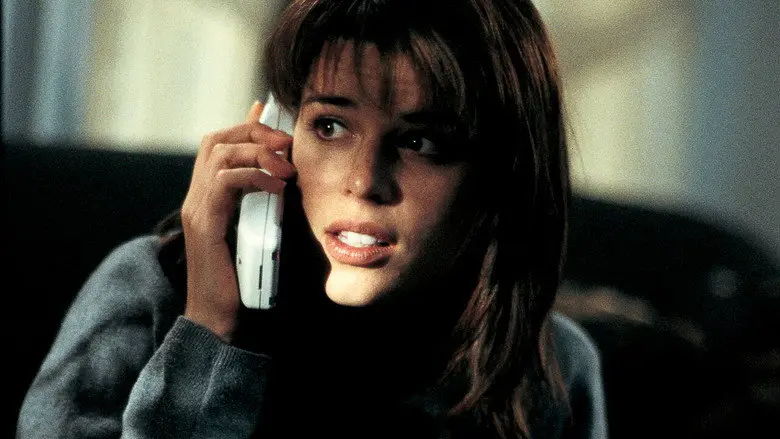
The phone makes horror conversational
The approved telephone frame captures the film's most important shift. The threat is not introduced by a shadow crossing a doorway. It arrives as a voice asking questions, testing boundaries, and treating fear as a game. The phone brings the killer into the house without showing how he got there.
That structure lets Scream move between intimacy and spectacle. Casey Becker's opening scene turns a familiar object into a line of attack, while Sidney Prescott's later calls make the same technology feel like a trap waiting to reopen. The phone is portable and ordinary. It can connect friends, strangers, and the killer with the same ring.
For MovieWordle players, the useful combination is a domestic interior, a corded or handheld phone, warm late-1990s color, and a character listening rather than simply running. The frame points toward a slasher in which conversation is part of the violence.
Ghostface is a role before it is a person
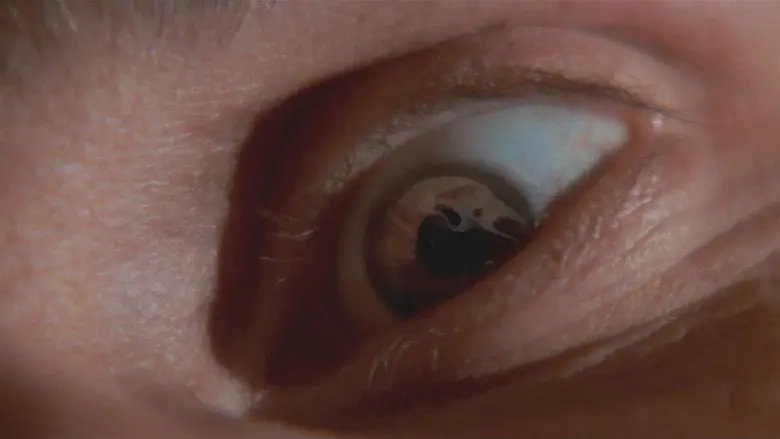
The eye frame makes the identity problem physical. A face is reduced to one eye, and the reflected shape offers a clue without revealing the person holding the weapon. This is how the film handles Ghostface: the costume is visible, but the individual behind it remains interchangeable.
The mask also turns the killer into a shared cultural language. Characters recognize the rules of slasher movies, quote those rules, and still fail to know which friend is using them. Ghostface is frightening because the costume creates a public role. Anyone who can put it on can borrow its authority for a night.
The knife frame extends that idea. It is isolated against black, with a gloved hand and a small red edge. The object carries the genre's promise of violence, but it does not explain motive. Scream separates the recognizable sign of a slasher from the person who decides to use it.
The film's real subject is borrowed behavior
Sidney, Gale, Dewey, Randy, and the other survivors are constantly interpreting scenes through movie knowledge. That self-awareness does not make them safe. It gives the killers a script to exploit and makes the audience watch for the next familiar beat.
The result is a theme of shared guilt rather than a simple conflict between innocent victims and a monster. Billy Loomis and Stu Macher choose to perform the Ghostface role, while the film shows how violence becomes entertainment, gossip, and imitation. The characters replay one another's behavior until the boundary between observer and participant becomes unstable.
The ending reveals two faces behind the mask
Billy and Stu are revealed as the killers. Billy blames Sidney's mother for the collapse of his family, while Stu describes his participation through peer pressure. Together they planned the murders and attempted to frame Cotton Weary.
Sidney turns the performance against them. Billy is shot after he appears to be dead, and Gale shoots him again to make sure he cannot rise. Stu is killed during the struggle in the house. The ending answers the identity question, but it does not reduce the film to a single motive. Ghostface was a costume, a plan, and a way for two people to make private resentment look like genre destiny.
Conclusion
The most useful Scream explained reading follows the chain from phone to eye to knife. Each object reveals something while withholding the person behind it. The approved frames make the film recognizable because they preserve its central tension: in Scream, the killer is not only hidden in the dark. He may be standing inside the scene, waiting for the role to begin.
Keep playing
Ready for another film? Browse the MovieWordle 6 Frames archive and choose a recent puzzle to solve.