
FRAME BY FRAME · ISSUE 23
Coherence Visual Analysis
2014 · Thriller / Science Fiction · Directed by James Ward Byrkit
Spoilers below, including the ending.
James Ward Byrkit’s 2014 Coherence begins with a dinner party and a power cut, then lets a passing comet make every ordinary social assumption unreliable. This Coherence explained guide keeps close to what the film shows: phones, glow sticks, doors, houses, and a group of friends trying to decide whether the people outside are strangers or versions of themselves.
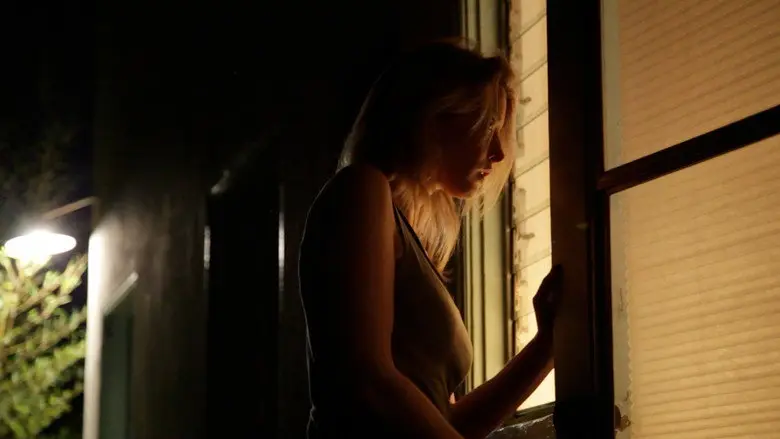
Coherence makes the familiar house feel like a live experiment
The film’s tension depends on small disruptions before it depends on science-fiction explanation. A phone breaks. The lights go out. Someone reports one lit house down the street. Because the story stays near the dinner table, a decision to walk outside feels larger than it would in a conventional disaster film.
The approved doorway frame is a strong MovieWordle cue for that reason. Its warm porch light and a figure pausing at the threshold suggest an ordinary suburban evening, while the darkness beyond it becomes part of the plot’s pressure. Coherence keeps returning to objects that should make people legible to one another—phones, notes, photographs, glow sticks—and shows how quickly those tools become inadequate.
The box turns identity into something people can inventory
As the group learns that nearby houses may contain parallel versions of the same evening, they build a box of objects to distinguish themselves. The plan is practical and temporary: label a group, carry the box, and return to the correct house. But every safeguard depends on shared trust at the moment trust is disappearing.
That is the film’s visual method. It does not need large digital effects to make multiple realities unsettling. It uses dark porches, window light, and a small set of props to make the audience notice the limits of recognition. A friend’s face remains familiar, but the situation no longer supplies a stable answer to who that friend is.
The comet gives the situation an external trigger, but the drama stays interpersonal. Old resentments, private plans, and small corrections to someone else’s version of the evening suddenly matter because each detail could identify which house a character has entered. A casual dinner conversation becomes evidence, although no one can be sure when a memory comes from this version of the night rather than another.
The enclosed scale is essential. The characters do not have a laboratory, an expert, or a map of the phenomenon; they have one house, another house with a light on, and a limited ability to coordinate. That restriction makes every trip into the dark feel consequential. It also keeps the science-fiction idea from floating above the people: the practical question is always which version of a friend can safely be trusted when the next explanation may be contradicted at the door.
A watched face gives the night a false sense of control
One approved frame isolates a man in a checkered shirt against a dark background. The available light catches his face while leaving the surrounding room hard to place. It helps identify the film because Coherence repeatedly narrows its world to what a character can confirm in a moment, even as the larger situation changes beyond view.
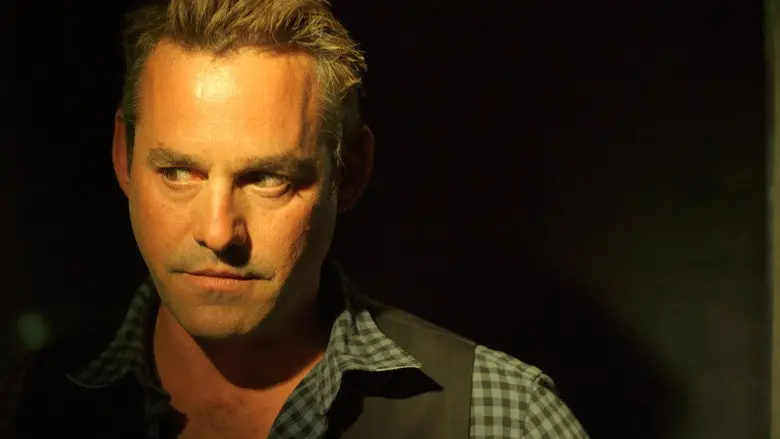
For MovieWordle players, that combination matters: a naturalistic dinner-party setting, practical light, a dark suburban threshold, and faces held in suspense. The group is always one decision behind the reality it needs to understand. The images are recognisable without announcing the plot’s answer.
Coherence ending explained: Em chooses a version of the night
By the end, Em enters another house that appears to have had a more peaceful version of the evening. She incapacitates the other version of herself and takes her place, hoping to remain with Kevin in this better outcome. The next morning, however, Em receives a call from the version of herself she thought she had removed, making clear that her solution has not restored a single stable reality.
The ending does not establish a clean hierarchy of “real” worlds. It shows Em trying to solve an unbearable situation by choosing a life that seems preferable, then finding that the act of choosing has created another fracture. The film keeps the plot fact and the interpretation separate: Em crosses into another version of events; whether she can ever belong there remains unresolved.
That choice also changes the scale of the film. What began as a group problem, managed through shared rules and a box, ends as an individual attempt to secure a preferred outcome. Em does not gain control over the system; she takes an action inside it and discovers that the system continues to produce consequences. The final call is effective because it reopens the uncertainty that her substitution was meant to close.
It is tempting to treat the ending as an equation with a single answer, but the film has spent the whole night resisting that kind of confidence. The box offers a temporary method of sorting people, not a guarantee that anyone will make a good choice once they see an opportunity. Em’s decision narrows the film’s fear to something painfully ordinary: the hope that a different room might contain a version of life in which earlier mistakes did not matter.
Why the recognition cues matter after the reveal
On a rewatch, watch how often the film asks characters to make a quick practical rule. Pair up. Mark a group. Take the box. Do not trust the people at the other house. Each rule is sensible, and each reveals how fragile certainty becomes when the social setting stops agreeing on a shared past. The doorway and watched face do not stand for a hidden code; they make that constrained, improvised world visible.
Conclusion
The best Coherence explained reading treats the comet as the pressure that exposes relationships already full of uncertainty. The box, dim interiors, and improvised light turn an abstract multiverse premise into a night of recognition failures. Em’s ending choice is frightening because it is understandable, not because the film supplies one final cosmic answer.
Keep playing
Ready for another film? Browse the MovieWordle 6 Frames archive and choose a recent puzzle to solve.